
G = GeneSIS
Did you know that the parables of Jesus were true stories, which are mentioned somewhere else in the Bible? Some of the parables even happened, while Jesus was living on earth (for example, His own wedding was told in the parable of the ten virgins; see Part 0 and Part 1, of the 7 Literal GRAILS).
Also, Jesus and His 12 disciples were related to other people, mentioned in the Bible: some of those relationships are stated directly—such as Mary, the mother of Jesus; also, James and John were brothers (see Matthew 1:18; 2:11; 4:21; 10:2; 17:1; 13:53-55; Acts 1:14; etc). However, many of the relationships are not stated directly; they are hidden truths, designed to be found—the symbolic grail, of who’s who? The book of GeneSIS has a lot of genealogy—and so do other places, in the Bible; for example, the ancestry of Jesus (see Matthew 1:1-17; LUKE 3:23-38).
“GeneSIS” refers not only to the first book in the Bible, it also has two embedded words: “Gene” and “SIS”; the first is the root word, for “genetics” and “genealogy”—and the second is short for “SISter” (the GeneSIS category includes all family relationships, not merely sisters). Do you know who the SISters of Jesus were, BY NAME?? Stay tuned, to learn all about their real names—and other details that are recorded in the Bible, about them.
This is the landing page, for studies and information about these and other similar topics.
——————————————————————————————————————————————————————
The Certain Method: C.E.R.T.A.I.N.
Other symbolic grails have an acronym, to help find the related hidden truths; for example, the chronology acronym is YES FAWN (https://7grails.world/7-symbolic/chr/abc/); and the archaeology acronym is MEET AT GRAVEYARDS (https://7grails.world/7-symbolic/arch/). Additionally, this GeneSIS subject has an acronym: CERTAIN (see below); use this method to be certain, that you know who’s who (especially in the New Testament).
C = “Certain”
E = Events
R = Relatives
T = Timing
A = Area
I = Impact
N = Names
“Certain” The first word, in the above acronym, is in quote marks: this is because the word “certain” is frequently found, in the context of important who’s who connections; it is the Greek word #5100 (tis), and translated “certain” (in the KJV, and many other versions—or translated “one” in some versions). This word is used extensively, by LUKE, in both of his books (the gospel of LUKE, and Acts); yet it can come in several forms (uninflected nominative singular, neuter singular, accusative singular, genitive singular, dative singular, nominative plural, etc)—so it doesn’t always refer to humans, or who’s who connections. Therefore, as with all of the words—in the above acronym—it is only the combination of evidences, from this list, that makes the who’s who connection “certain” (not merely the one word, tis, if nothing else in the acronym applies).
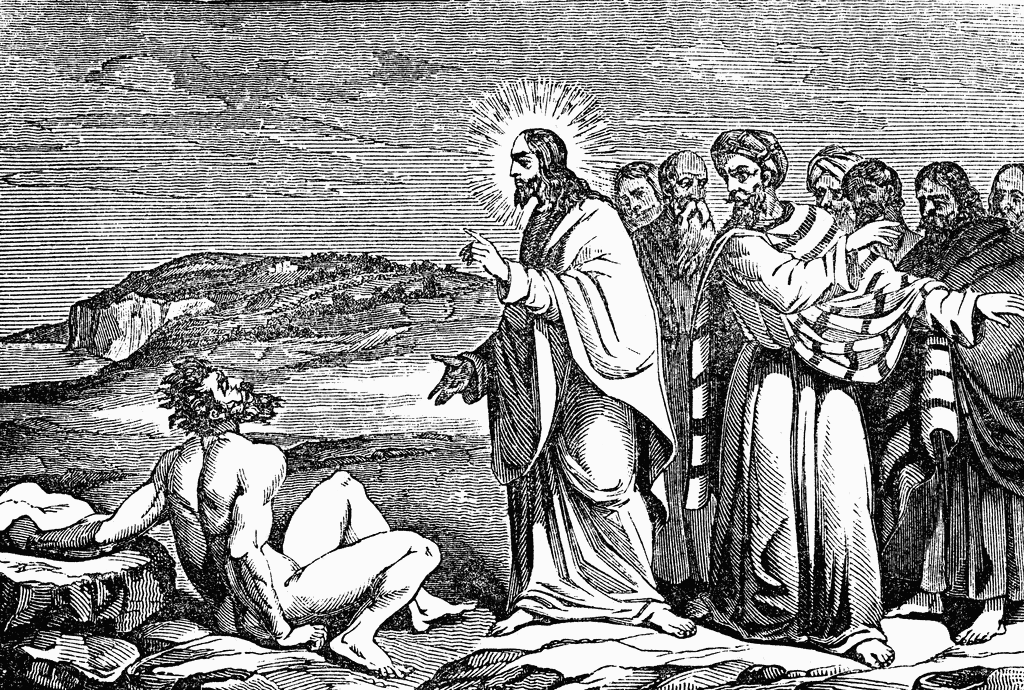
Events This one simply refers to finding similar events, that help to connect the person or people involved. For example: “And when he went forth to land, there met him out of the city a certain [tis, #5100] man, which had devils long time, and ware no clothes, neither abode in any house, but in the tombs. … They also which saw it told them by what means he that was possessed of the devils was healed.” (LUKE 8:27,36). Compare that event, with this one: “And as he was yet a coming, the devil threw him down, and tare him. And Jesus rebuked the unclean spirit, and healed the child, and delivered him again to his father.” (LUKE 9:42). These are two different events, at two different times, and two different places; but they are similar—both involve Jesus healing someone, with demon possession. This fact, ALONE, would not prove that the people involved were related (just like the Greek word tis, alone, doesn’t prove anything for certain). Nevertheless, it is ONE of the evidence categories, in the acronym, that can reveal a GeneSIS connection—if it is combined with other good evidences, from the acronym list (in this case, these two people were genetically related; so stay tuned for the full details, including their actual names).
Relatives As mentioned above, some family relationships in the Bible are stated directly; and some are hidden—in fact, as with most truths (not just family relationships), the hidden things are the most important (like valuable buried treasures). What nobody has ever taught (until now): at least TEN of the twelve disciples, were closely related to Jesus (genetically, and/or through marriage). For example, James and John were brothers (see Matthew 1:18; 2:11; 4:21; 10:2; 17:1; 13:53-55; Acts 1:14; etc); and John was married to Martha, who was the half-SISter of Christ’s literal bride (https://7grails.world/7-literal/1-wedding/). This connection is definitely a hidden one: because almost everyone has merely ASSUMED, that Jesus did not get married to anyone (it’s all just fiction, supposedly); but the fiction days are over—because it is now very solidly documented, from numerous biblical passages (including the entire book, Song of Songs). And there is far more evidence, in some of the other 7 Literal GRAILS articles (https://7grails.world/7-literal/).
Timing Chronology alignments, including but not limited to anniversaries, are extremely powerful ways to make who’s who connections. This is one of many reasons, why knowing EXACT chronology is tremendously valuable (https://7grails.world/7-symbolic/chr/); and this is also why it is very important—to understand the exact year, of each New Testament book (https://7grails.world/babel/dated-27/exact-27/). Unfortunately, almost all Christians—including most scholars—have almost completely ignored biblical chronology; and this is one of the main reasons, why Christianity has entirely missed so many hidden truths (as is repeatedly documented, on this website).
Area When two or more things happen, in the same area, then this could be another who’s who connection. For example: “And from thence to Philippi … And a certain [tis, #5100] woman named Lydia … And it came to pass, as we went to prayer, a certain [tis, #5100] damsel possessed with a spirit of divination met us …” (Acts 16:12,14,16). These two women were in the same area (Philippi); and they were also closely related, through marriage (https://7grails.world/7-symbolic/sis/syntyche/).
Impact God never puts anything in the Bible, just for entertainment; so if indeed there is a hidden who’s who connection, in the Bible: we should be asking what impact is made, by the connection? For example, understanding who the two women were, at Philippi (above), leads to another very clear connection: Peter was the bishop of Philippi, NOT Rome! Peter was the Philippi bishop, for 14 years (https://7grails.world/7-symbolic/sis/syntyche/); afterward, he went to Rome, where he was martyred (after being in prison, for a few weeks). Therefore, he was NEVER a bishop in Rome; so the impact, for this who’s who connection, shatters one of the biggest Christian traditions of all time!
Names Sometimes biblical characters are given a specific name, such as Lydia (above); and sometimes no name is listed, in the immediate context, such as the possessed damsel (mentioned two verses after Lydia). Nevertheless, just because a name isn’t given, in context, does NOT necessarily mean that the person is never named anywhere else (in the Bible); for example, the possessed damsel was Peter’s wife, named Syntyche (https://7grails.world/7-symbolic/sis/syntyche/). Whenever the same name is found—even in different times and/or locations—it is most likely referring to the same person, unless the details remove that possibility. Another factor to keep in mind, that nearly everyone has missed, is the fact that one person can have two or more names—such as Peter, Cephas, Simon, son of Jonas, etc. Well, actually people do understand this fact: WHEN IT IS SPOON-FED TO THEM, such as the names of Peter; but wherever the spoon-feeding stops, so does the comprehension. For those who want to advance beyond baby food, however, the Bible has NUMEROUS hidden name connections; for example, Lydia and Euodia are two names for the same woman, at Philippi (https://7grails.world/7-symbolic/sis/syntyche/). It is also important to notice the meaning of names, which frequently help to unveil who’s who; for example, Syntyche means: “The name Syntyche is of ancient Greek origin (Συντύχη). It comes from the words syn (‘together’ or ‘with’) and tyche (‘luck’, ‘fortune‘, or ‘destiny‘).” (Google AI). This name meaning helps to connect her with the possessed damsel, in the same city (Philippi): “… a certain damsel possessed with a spirit of divination met us, which brought her masters much gain [fortune] by soothsaying [fortune telling, destiny predictions, etc] … in the name of Jesus Christ to come out of her. And he [the evil spirit] came out the same hour. And when her masters saw that the hope of their gains was gone …” (Acts 16:16-19). Last but not least: sometimes a father and son (or other close relatives) had the same name (see Luke 1:59-63); this is still common, even in our day—and knowing this fact, can help to make various who’s who connections.
——————————————————————————————————————————————————————
List of Who’s Who GeneSIS Articles
Peter, the Bishop of Philippi—NOT Rome!
https://7grails.world/7-symbolic/sis/syntyche/
Stay tuned, for many more.
Get Involved, and Make a Difference!
Your contribution can help us continue our mission, and make a positive impact in people’s lives.
Clipart from Florida Center for Instructional Technology: https://etc.usf.edu/clipart/